
- From the village
- About an hour and a half by car to Pounta
- Depth
- About 3 to 4 metres
- Good for
- Snorkelling, history, a long sandy beach
- Combine with
- Elafonisos, by ferry from Pounta
Why go to Pavlopetri
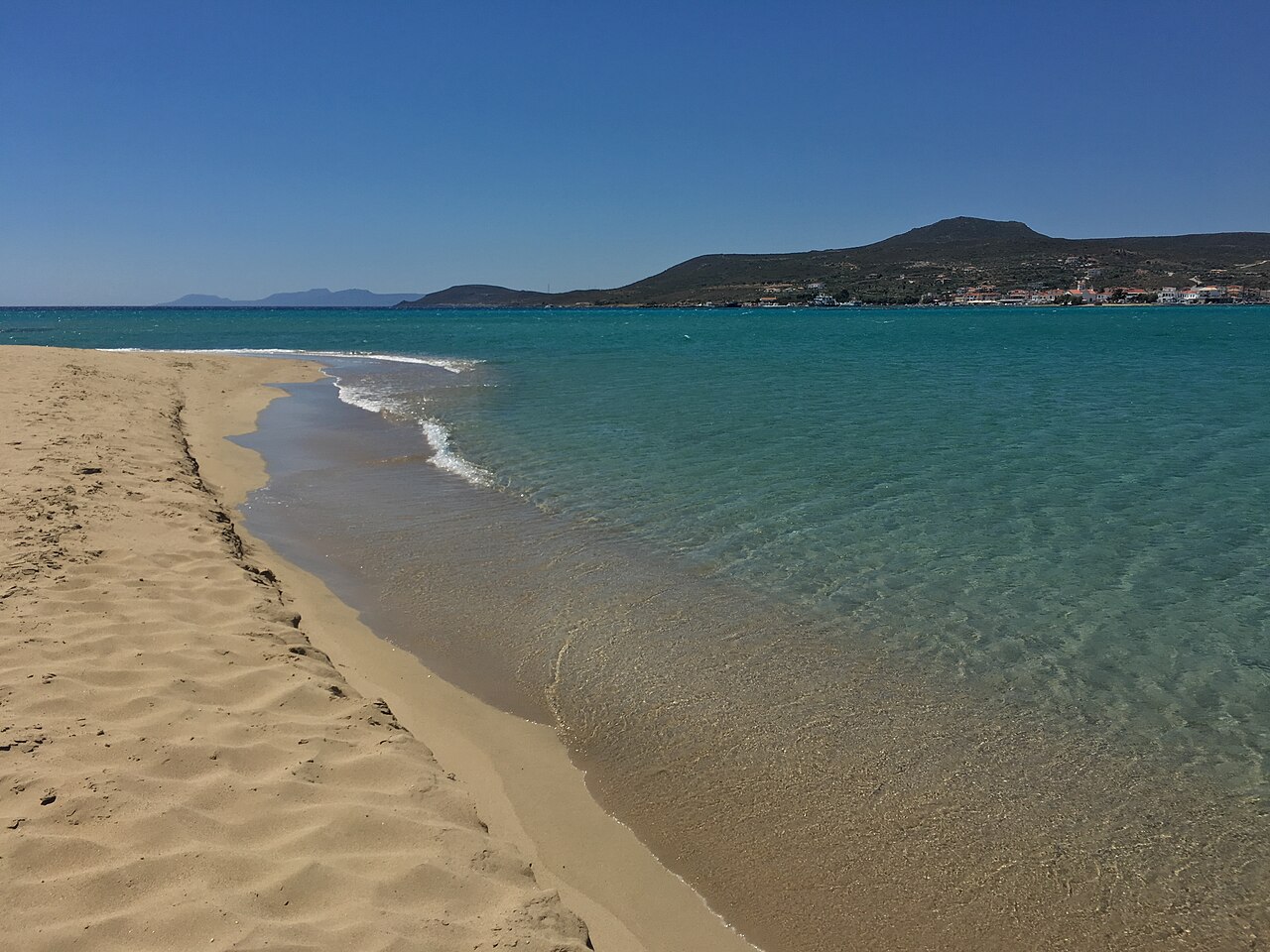
Off Pounta beach, between the shore and the small islet of Pavlopetri opposite Elafonisos, lie the remains of a town first settled around 3500 BC. It is often described as one of the oldest known submerged towns in the world, and it is unusual in preserving an almost complete town plan, with streets, buildings and tombs, in just 3 to 4 metres of water. For a swimmer with a mask it is one of the most remarkable sights on the Laconian coast, and it sits right beside the long sandy beaches of Vatika Bay.
What lies beneath the water
The settlement covers more than 60 stremmata of seabed, about 6 hectares. Finds reach back to the Final Neolithic and continue through the Bronze Age, and surveys since 2009 have recorded buildings of many rooms and signs of a textile industry and trade by sea. Earthquakes and a rising sea gradually took the town under water.
More than a century of discovery
The site was first noted in 1904 by the geologist Fokion Negris, rediscovered in 1967 by the oceanographer Nicholas Flemming and mapped in 1968 by a team from Cambridge. Since 2009, the University of Nottingham has studied it systematically together with the Greek authority for underwater antiquities.
Pounta and the beaches of Vatika Bay
The ruins lie in shallow water just off the beach at Pounta, close enough for swimmers to see. On land, Pounta–Viglafia, Magano–Agios Georgios and Neratzionas–Kambos together form one continuous sandy beach of about five kilometres with turquoise water, so there is plenty of room to swim before or after.
Getting to Pavlopetri from Agios Dimitrios
Pounta, where the boat leaves for Elafonisos, is about an hour and a half by car from Agios Dimitrios towards Neapoli, so Pavlopetri and the island can share a day if you start early. The site is protected: only mask and snorkel are allowed, not scuba equipment, and nothing may be touched or taken. Swim out from the beach and keep well clear of the boats around the ferry quay.
Questions guests ask
Can you see Pavlopetri underwater?
Yes. Pavlopetri lies in 3 to 4 metres of water just off Pounta beach, and on a calm, clear day swimmers with a mask and snorkel can see its architectural remains; scuba diving is not allowed.
How old is Pavlopetri?
Pavlopetri was first settled around 3500 BC and remained inhabited through the Bronze Age, which is why it is often described as one of the oldest known submerged towns in the world.
Roads, sea conditions and opening times change with the season, so check locally on the day.